
AI Fact-Checking Jobs: Who Hires and What They Pay (2026)
Remote AI fact-checking jobs are posted as evaluator, research, writer and expert roles. Who hires, what 142 open listings pay ($5 to $220/hr), and who gets hired.
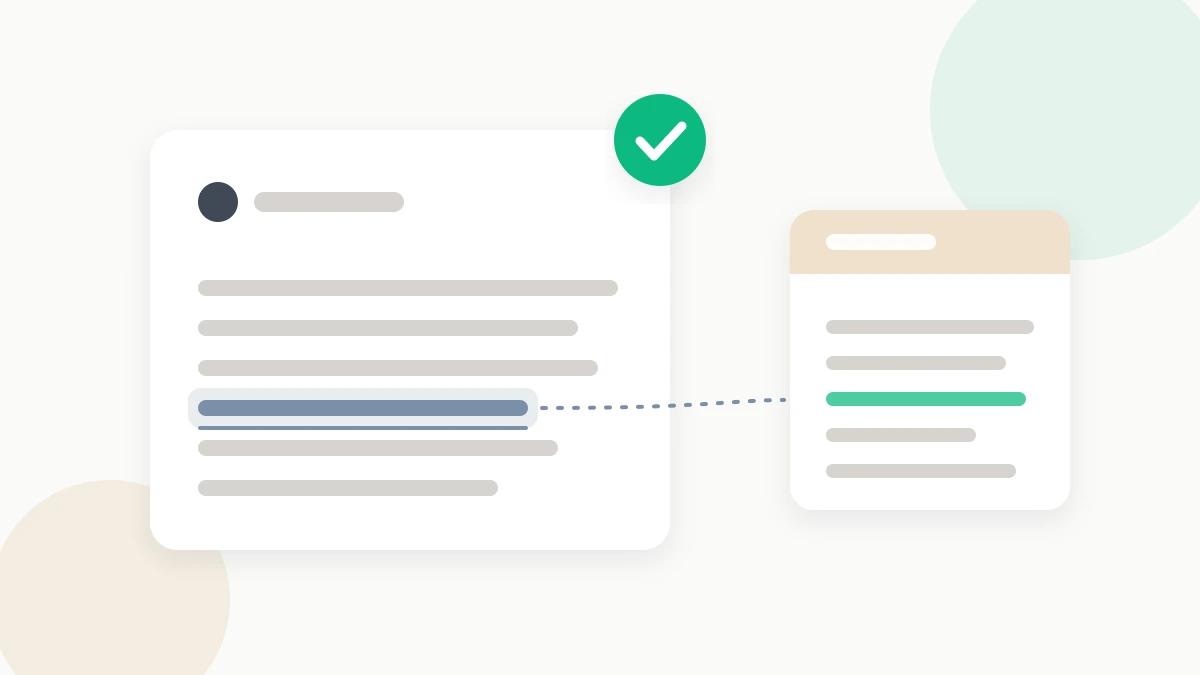
Remote AI fact-checking jobs exist, but platforms almost never post them as "fact checker." Of the 6,535 AI training listings we track, 142 include fact-checking in the work. It sits inside AI response evaluator, research analyst, generalist, writer and domain-expert roles, where you check the claims in a model's answer against sources and document each error.
Of those 142 listings, 138 state a rate, from $5 to $220 an hour, and typical pay is $51. The spread comes from what else the role asks for: a second native language, a newsroom background, or professional expertise in medicine, law or engineering.
For editing, creative writing and other language-based work beyond fact-checking, see our guide to non-coding AI jobs for writers and humanities graduates.
AI fact-checking pays $5 to $220 an hour, and your field or language decides where you land
- The work is claim-by-claim verification, where you check each fact in an AI answer against a reliable source and record the error.
- Journalists and editors have the clearest fit, with Alpheva's Journalism Expert role stating $170-220/hr.
- Language roles make up 59 of the 142 listings, so a second native language widens your options.
- Expect a screening test or interview in your subject or language before you get project work.
AI fact-checking means verifying each claim in a model's answer
You read a prompt and one or more AI-generated answers, check every objective claim against a reliable source, and record what is wrong and where you found the correction. Most evaluator listings describe the same loop: judge each response on instruction following, truthfulness, coherence and length, use search tools to check every objective claim, and cite a reliable source for each error. Then you write up each response's strengths and weaknesses, score it, and say which answer is better and why.
Example: checking a three-claim answer
AI answer: "The Eiffel Tower was completed in 1887 for the Paris World's Fair and stands about 330 meters tall."
- "Completed in 1887": wrong. Construction started in January 1887 and finished in March 1889.
- "For the Paris World's Fair": correct. It was built for the 1889 Exposition Universelle.
- "About 330 meters tall": correct. The tower has measured 330 meters since a new antenna was added in 2022.
Error note you'd write: "Claim 1 is wrong. The tower was completed in March 1889, not 1887, which is when construction began. Source: the history section of toureiffel.paris, the tower's official site."
The errors worth catching are the ones that sound right: wrong dates and figures, misattributed quotes, sources that do not say what the answer claims, and steps in an argument that do not follow. Alpheva's Journalism Expert listing puts it in editorial terms, asking reviewers to catch unsupported attribution, missing source context and weak editorial judgment.
Some projects turn the task around and ask you to build facts that AI cannot find. Turing's Web Research Specialist role starts from a verifiable fact and works backward to a research question that a browsing AI fails to answer, then proves it with an evidence trail citing exact pages, tables and sections.
Fact-checking is listed inside evaluator, research, writer and expert roles
These open roles state fact-checking or source verification as a core duty. Pay is the rate each listing states.
| Role | Stated pay | Where fact-checking comes in |
|---|---|---|
| Journalism Expert, Alpheva | $170-220/hr | Review model answers for unsupported attribution and missing source context, then write reference answers and scoring criteria |
| Healthcare Expert (MD, DO, RN, NP, PA, MPH), Mercor | $150-190/hr | Check medical answers against trusted public sources |
| Web Research Specialist, Turing | Not stated | Build research questions around verifiable facts, with a full evidence trail |
| Search Generalists, Mercor | $10-30/hr | Rate AI search answers for factual accuracy and completeness |
| Legal Content Expert (AI Community), TELUS Digital | $20-50/hr | Check the names, dates and basic laws in AI-written legal text for your country |
| AI Pilot Task Delivery Assistant (Freelance), Mindrift | $8/hr equivalent | Fact-check a scientific claim, among other research tasks |
| Expert roles (59 listings), SME Careers | $50 to $150/hr, typically $70 | Fact-check technical claims while writing model solutions and ranking answers |
| Language roles (55 listings), SME Careers | $5 to $100/hr, typically $25 | Fact-check answers in your language alongside grammar and localization checks |
Open listings that include fact-checking, by platform
| Platform | Listings | Stated pay per hour |
|---|---|---|
| SME Careers | 114 | $5 to $150 |
| Mercor | 11 | $10 to $190 |
| TELUS Digital | 5 | $10 to $50 |
| Turing | 4 | Not stated |
| Alignerr | 3 | $40 to $120 |
| Mindrift | 3 | $8 to $9 |
| Alpheva | 1 | $170 to $220 |
| Remo Experts | 1 | $30 to $65 |
SME Careers accounts for 114 of the 142 listings, because its standard expert description includes fact-checking next to writing model solutions and comparing AI responses. They range from attorney and radiologist roles to language expert roles.
Highest-paying open role on each platform


Medical Doctor (Specialist)
Up to$150
/hr

Research Analyst
$40-120
/hr



Your field or second language sets the pay
Fact-checking on its own sits at the bottom of the range, and pairing it with a profession, a newsroom background or a second language moves you up. Generalist research and evaluator roles pay $8 to $120 an hour, with typical pay of $20. Language roles pay $5 to $100, with typical pay of $25. Expert roles in fields such as law, medicine and engineering pay $10 to $190, with typical pay of $70. Writing and journalism roles pay $55 to $220.
Senior newsroom experience is where the rate jumps. Alpheva's Journalism Expert role states $170-220/hr, among the highest rates for fact-checking work we track.
Turing's Web Research Specialist listing does not state a rate, so ask Turing for it before you commit time to the role.
When we first published this guide on September 28, 2026, 153 listings that include fact-checking stated a rate, with typical pay of $50 an hour.
Journalists, editors and researchers match what the top listings ask for
The higher-paid listings ask for professional sourcing and editorial experience, while generalist and language roles accept a native language and solid research skills. Alpheva's Journalism Expert role asks for senior journalism expertise in sourcing, fact checking, attribution and editorial standards, and for explaining consequential errors and the reasoning behind each correction.
Turing's Web Research Specialist accepts a master's degree or more than three years of experience, and looks for backgrounds in reference librarianship and archives, investigative journalism or professional fact-checking, OSINT and due diligence, patent and legal-discovery search, genealogy, or puzzle-hunt construction. It also wants precision with sourcing, down to the exact page and table.
Search and generalist evaluator roles list search quality, fact-checking, trust and safety or content evaluation as relevant experience. Language roles ask for a native speaker with solid English and test both in a screening.
Search by role name, then add your field or language
Search job boards for "evaluator," "research analyst," "generalist," "writer," "journalism" and "research specialist," then add your field or language. The writing and generalist job pages collect most of the non-expert roles.
On your profile and CV, describe verification work in the words these listings use: checking claims against primary sources, working to a style guide, logging corrections, citing exact pages. If you have fact-checked for a publication, name the publication and the kind of material you checked.
Expect a screening step before any paid work. SME Careers' Catalan role, for example, pairs a language screening with a short fact-checking exercise. Apply to two or three platforms at once, since project availability changes independently on each.
Frequently asked questions
Are there AI fact-checking jobs?
Yes, but platforms almost never post them under the title "fact checker." Of the 6,535 AI training listings we track, 142 include fact-checking in the job description. Look for AI response evaluator, research analyst, generalist, writer and journalism expert roles instead.
How much do AI fact checker jobs pay?
Stated pay on AI training listings that include fact-checking runs from $5 to $220 an hour, and typical pay is $51. Language roles pay $5 to $100, expert roles in fields such as law, medicine and engineering pay $10 to $190, and Alpheva's Journalism Expert role states $170-220/hr.
What does an AI fact checker do?
An AI fact checker verifies each objective claim in an AI-generated answer against a reliable source and documents every error with the source that corrects it. Most projects then ask you to score or rank the answers and explain your reasoning in writing.
Can I use search engines or AI tools when fact-checking?
Search engines, yes, since the work depends on them. Mercor's generalist and expert roles ask you to check answers "using trusted public sources and external tools." The listings don't say whether AI chatbots are allowed inside a task, so check each project's guidelines before using one. SME Careers' English Language Expert role does ask for hands-on experience with Perplexity, Gemini and ChatGPT.
How do platforms test fact-checking skills before hiring?
Most use a test or interview in the subject or language you apply for. SME Careers' Catalan role asks for a language screening followed by a short fact-checking and linguistic QA exercise. Expect a screening step in your field or second language on most platforms before any paid work.
Do I need journalism experience to get an AI fact-checking job?
Generalist and language roles do not require it, but the highest-paid writing roles ask for it. Alpheva's Journalism Expert role, at $170-220/hr, asks for senior journalism expertise in sourcing, fact checking, attribution and editorial standards. Language roles ask for a native language and solid English.
Can I get an AI fact-checking job without a degree?
Some roles accept experience in place of a degree. Turing's Web Research Specialist role asks for a master's degree or more than three years of experience. Language and generalist roles screen mostly on a test in your language or subject.
Are AI fact-checking jobs remote and part-time?
The AI fact-checking listings we track are remote contract roles, though some are limited to residents of one country. Hours vary by project, and expert roles are usually matched to projects rather than offered as a fixed weekly schedule.
Which companies hire AI fact checkers?
SME Careers, Mercor, TELUS Digital, Turing, Alignerr, Mindrift, Alpheva and Remo Experts all have open roles that include fact-checking. SME Careers has the most, with 114 listings, followed by Mercor with 11.
Related guides
Non-coding AI jobs for writers and humanities graduates: platforms that pay for editing, tone and creative writing work.
SME Careers review: the platform with the most listings that include fact-checking.
Legal AI training jobs: attorney and paralegal roles, many of which include fact-checking.
No-degree AI jobs: roles that screen on skills and experience instead of credentials.
What is AI training?: the kinds of tasks evaluators do, fact-checking among them.
Cite this page
"AI Fact-Checking Jobs: Who Hires and What They Pay (2026)", aitrainer.work, aitrainer.work/guides/ai-fact-checking-jobs

MSc Human-Computer Interaction | Founder
Pietro Romeo is the founder of aitrainer.work. He writes and checks the guides, and runs the Academy and the certification exam.